A few years ago I started an ongoing series of large urban landscape drawings, which have recently passed a milestone: some of the places I drew no longer exist. Drawings that depicted the London of the present have now become memories of its vanished past.
The first piece I created was of a launderette. Walking past the nondescript row of businesses in Fitzrovia, I was struck by its empty interior steeped in a yellow light, with the floor tiles forming grid lines and the washing machine doors elegant rows of ellipses. After capturing it in coloured pencil I decided that this type of mysterious, unpeopled urban space would be the focus of new drawings on a larger scale than I’d worked on before.
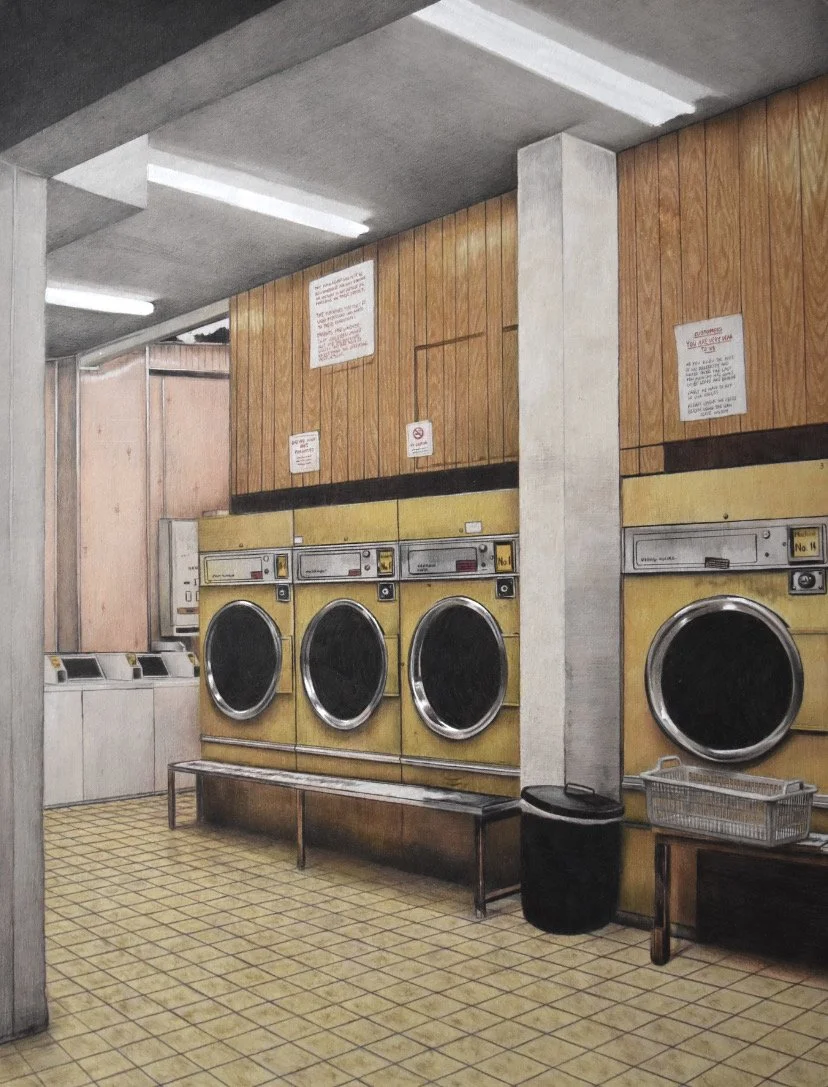
But recently, walking down the same street, I found that the launderette had gone. There were no closed signs on the door; the yellow light hadn’t given way to long shadows over empty machines and dusty tiles. The entity that was had simply ceased to exist, with no evidence that it had ever been at all. I thought then about how the drawing itself would never have been had I not happened to spot the launderette before its demise. The work suddenly took on the strange double quality of a lucky chance and an unplanned memorial.
The same experience subsequently occurred less than half a mile away in Soho, which was where another of my large drawing subjects stood.
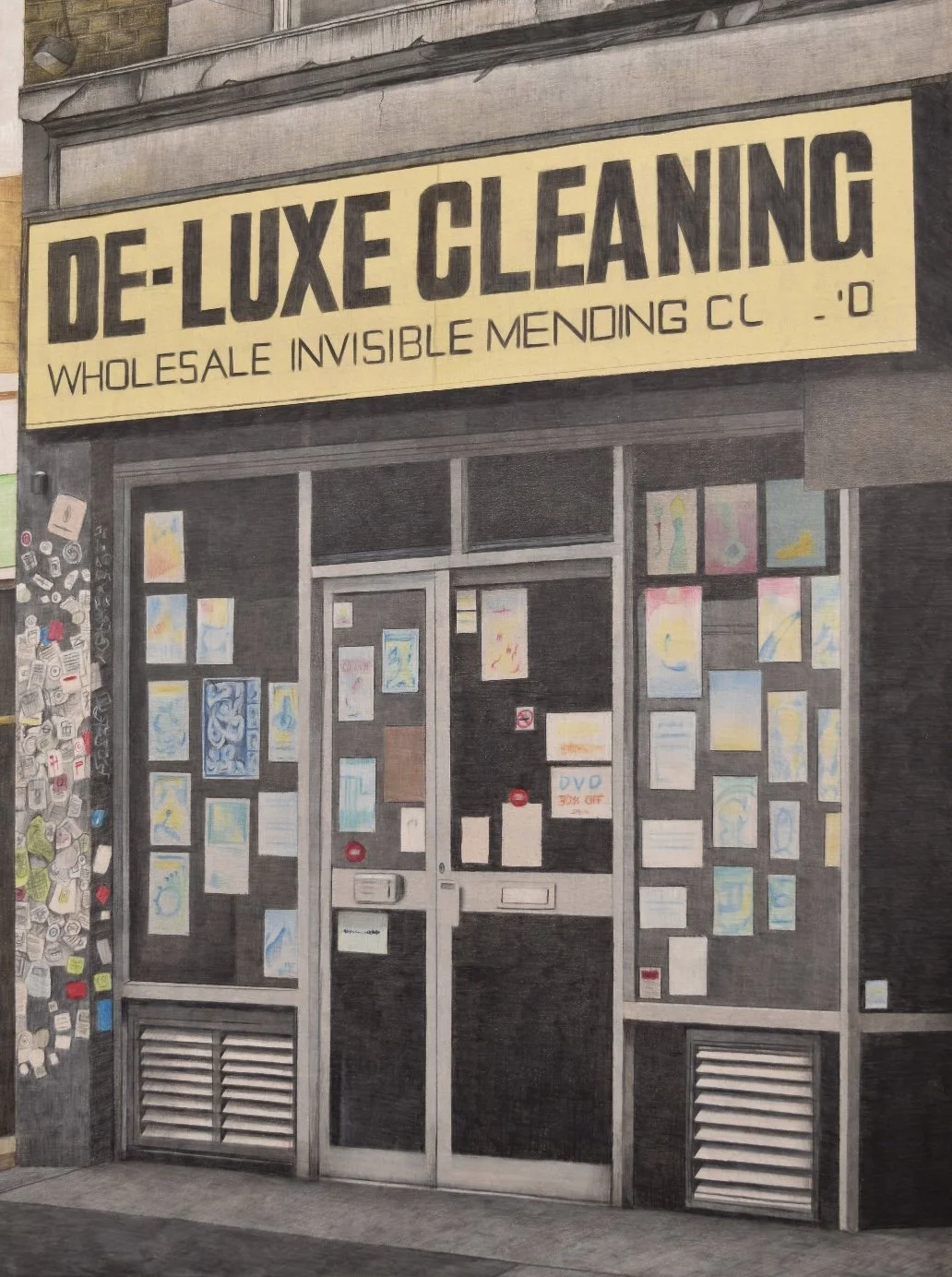
This time the facade itself was a memorial to what came before. In fact this is what inspired me to draw it. The original sign for a dry cleaners was still intact, though the business had long ago given way to a shop, which itself had departed this life, as attested by the anime posters that plastered the windows, all of which were fading to the same ethereal blue as the hazy distances of early Renaissance landscape paintings.
Then, only a short time later, the facade had gone. It was vain to hope that it had somehow been awarded protected status simply on the basis that I happened to find it dreamy. Now the epitaphic posters were no more; the clear glass showed a stripped and scrubbed exterior and ‘DE-LUX CLEANING’ had been obliterated by grey paint. It had become just another premises.
The same process may be happening, albeit in slow motion, to another of my subjects: Golden Lane swimming pool.
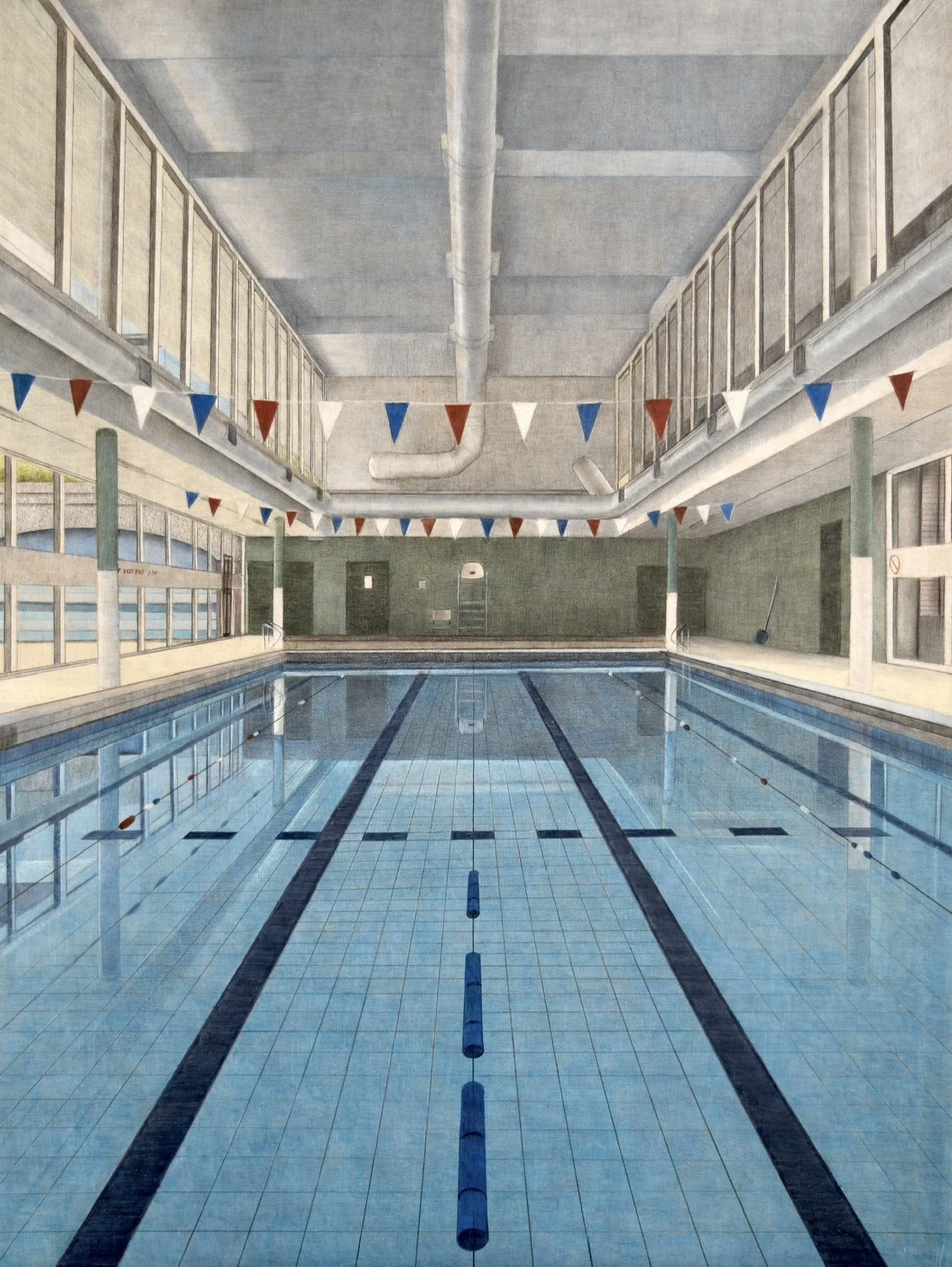
It’s located on the Golden Lane Estate, where I used to live, and I swam there many times over the years. But after lying desolate during the pandemic and never fully coming off life-support, in 2026 it was shuttered, and its future is inscrutable.
And redevelopment is encroaching ‘Museum Street,’ the second drawing in the series.
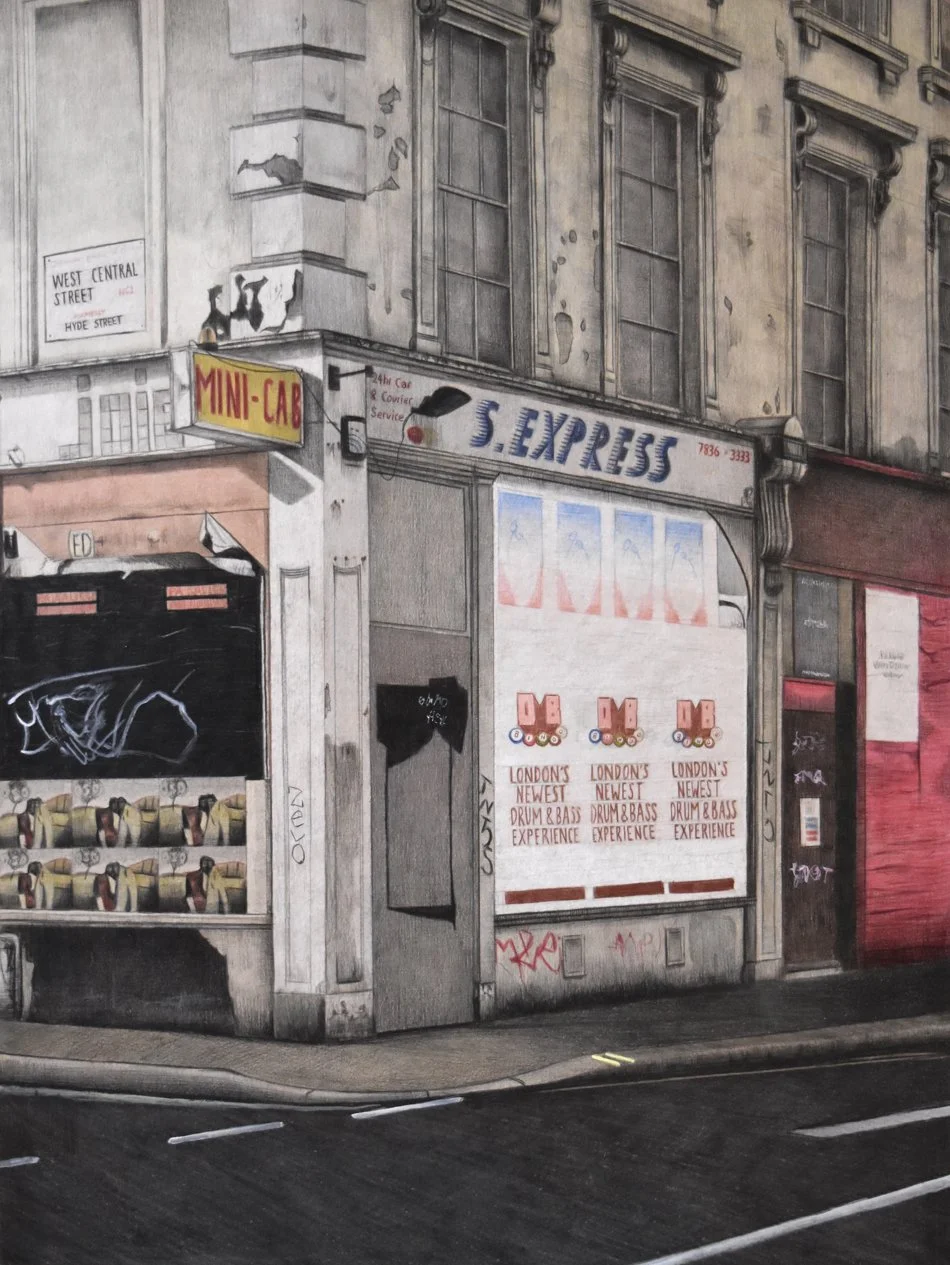
It was the sheer decrepitude of this old facade, a stone’s throw from the British Museum and minutes from Covent Garden, that I found arresting. But the tides of change sweep all obstacles into the past, and with a large new office building immediately opposite and a huge construction site directly next door, I fear that this too will be carried off.
For now though it remains, and the details captured in the drawing are still there to be seen by whoever passes on the street (or works in the office building opposite). But at some point those layers of colour will surely bear witness to an altered city.